


Skydance owns DC now, and it’s carrying about $80 billion in debt. So this piece asks one question: does James Gunn’s DCU plan make sense for a company like that?
I’m not picking a side here. Below are the numbers from the Gunn and Peter Safran era, with the sources at the bottom. You make the call.
Quick refresher. On Nov. 9, Skydance announced Gunn and Safran are stepping down as co-chairmen and co-CEOs of DC Studios, effective Dec. 1. That ends their planned eight-to-ten-year blueprint at the four-year mark. Former Marvel Studios executive Jeremy Latcham takes over as president and chief creative officer.
Latcham worked on Iron Man and The Avengers at Marvel, and on Guardians of the Galaxy with Gunn and Safran. He’ll report to Skydance Motion Picture Group co-chairs Dana Goldberg and Josh Greenstein.
How Studios Actually Get Paid
One thing to know before the movie numbers: studios don’t keep the box office. Theaters keep roughly 45% to 50% of domestic ticket sales, about 60% internationally and about 75% in China. On average, the studio gets back about half.
So a movie’s worldwide gross is not what the studio banks. It gets about half of that, and the production budget and marketing come out of that half.
Three Movies, Three Results
Superman (July 2025). $225 million production budget, plus $100 million to $125 million in marketing. Superman’s Ohio tax credit filing recorded $363 million in gross spending before incentives, which nets out to the $225 million budget.
It opened to $125 million domestic and $217 million worldwide, with an A- CinemaScore, and finished at $618.7 million: $354.2 million domestic, $264.5 million international. That ranked 10th at the 2025 global box office, and it was the year’s highest-grossing superhero movie.
At 2.75 times its budget, Superman cleared the industry’s standard 2.5x break-even mark ($562.5 million). Once home video, airlines and streaming came in, it’s estimated to have made a profit of $40 million to $56 million. The weak spot was overseas: only 42.7% of its money came from outside North America.
Supergirl (June 2026). It was the second movie because Gunn required projects with finished scripts to go first. It cost $170 million to $186 million to make, plus about $120 million in marketing and a $100 million-plus promotional partner campaign.
It got a B- CinemaScore, opened to $37.1 million domestic and finished at $126.5 million worldwide ($72.4 million domestic, $54.1 million international). That’s less than Blue Beetle’s $130.8 million in 2023, and the lowest worldwide gross for a DC movie since Catwoman in 2004.
Going in, TheWrap’s insiders put its break-even at $315 million worldwide. It returned about $63.3 million to the studio against $290 million to $306 million in spending, a theatrical deficit of more than $226 million. Even after home video and streaming, Page Six and trade sources say it lost $135 million or more, wiping out Superman’s estimated profit several times over.

Clayface (October 2026). The R-rated body-horror pivot. It cost $40 million to $44 million, or about $30 million to $34 million after UK tax credits, plus roughly $30 million in marketing.
It opened to $24 million domestic and $43 million worldwide with an A- CinemaScore. As of Nov. 15 it’s at $119.2 million worldwide ($63.6 million domestic, $55.6 million international), and it’s still in theaters. It’s now the highest-grossing body-horror movie ever, passing The Substance’s $77.3 million. Its theater count dropped by 532 locations in week three, from 3,478 to 2,946.
Even past 2.5 times its budget, Variety reported Nov. 10 that Clayface won’t break even in theaters and needs home video and streaming to turn a profit. The estimated profit after that is $5 million to $15 million.

Add It Up
Three movies. $439 million in production budgets and $250 million to $275 million in marketing. $864.4 million at the worldwide box office, with Clayface still running.
The studio’s share of that is about $432 million. Against $675 million to $730 million in total spending, the three movies finished their theatrical runs roughly $243 million to $298 million in the red. After home video and streaming, they’re still estimated at $90 million to $125 million underwater, with Supergirl alone at $135 million-plus.
All three leaned domestic, too. Superman made 57.3% of its money in North America, Supergirl 57.2%, and Clayface about 53% so far.
For scale, here’s how the first stretch of the last two shared universes looked. Different eras, different markets and more movies in each, so read it as scale, not a verdict.
- MCU Phase One (2008 to 2012): 6 movies, about $1 billion in budgets, $3.81 billion worldwide. About 3.8x. Highly profitable.
- DCEU, Man of Steel to Wonder Woman (2013 to 2017): 4 movies, $813 million in budgets, $3.12 billion worldwide. About 3.8x. Profitable, per former Warner Bros. film chief Greg Silverman.
- Gunn and Safran DCU (2022 to 2026): 3 movies, $439 million in budgets, $864.4 million worldwide so far. About 1.97x.
The TV Side
The plan also leaned on HBO and HBO Max series tied into the movies. Those cost money up front and sell no tickets.
Creature Commandos (2024 to 2025) was a low-cost animated launch, an estimated $25 million to $35 million. It never charted on Nielsen’s streaming top 10.
Peacemaker season 2 (2025) cost an estimated $60 million. Per Samba TV, its premiere drew 713,000 U.S. households, 22% more than the season 1 finale. Its finale fell about 40% to 435,000 households, 25% below the season 1 finale’s 584,000. It charted on Nielsen once, at No. 10 in finale week.
Lanterns (Aug. 16 to Oct. 4, 2026) is the big number. Skydance’s own Q3 shareholder letter says it averaged 22 million global viewers an episode and ranks among HBO Max’s strongest launches ever. Variety’s count going into the finale was 19 million.
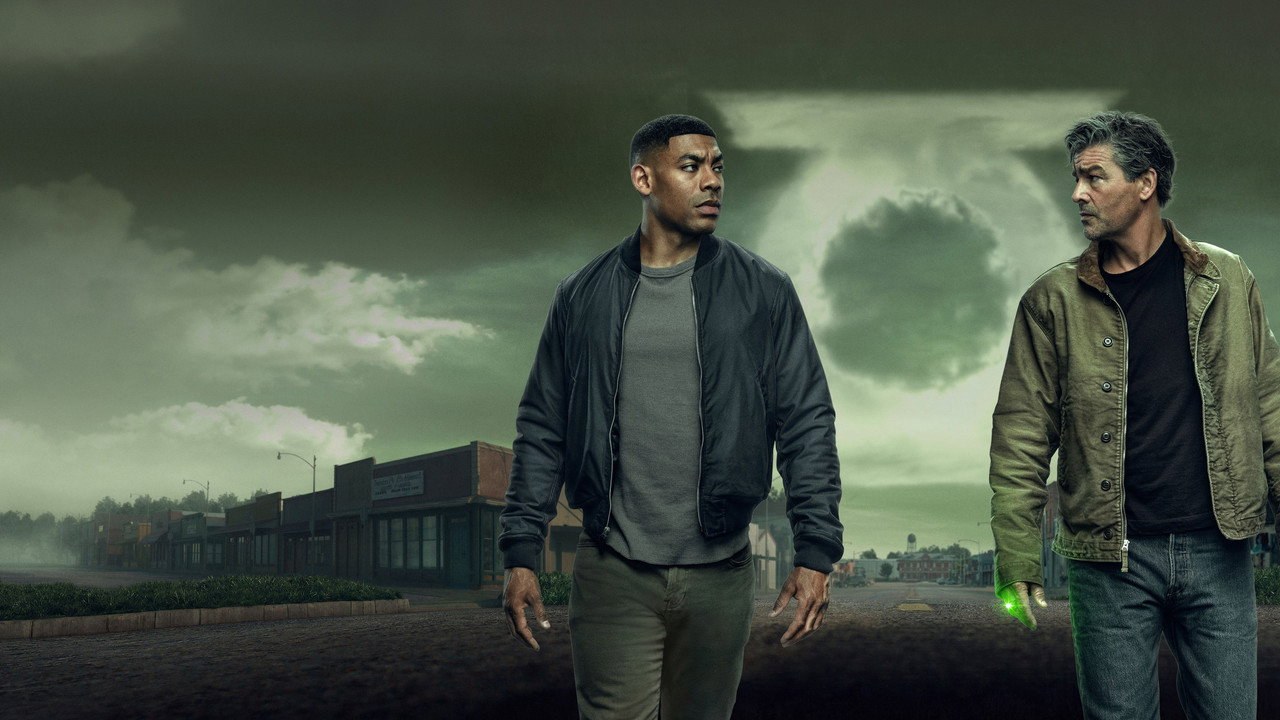
It also cost a lot. California Film Commission tax credit filings show $130 million in qualified in-state spending across 109 filming days, with 410 crew members and 5,717 background actors. Total production came to about $160 million, roughly $20 million an episode, and with about $40 million in marketing the total runs $170 million to $200 million.
Because Lanterns lives on HBO Max instead of being licensed out, that cost sat on the company’s own books while the movie side was losing money. As of today, there’s no season 2 order and no cancellation. Co-showrunner Chris Mundy called the odds a coin flip, while co-showrunner Christopher Cantwell posted, “Nothing’s cancelled.”
What the New Owner Is Carrying
Skydance closed its roughly $110 billion Warner Bros. Discovery deal on Oct. 6. It took on $80 billion to $87 billion in debt and pledged $6 billion in annual cost savings over three years. Fitch downgraded its bonds the day the deal closed.
Warner’s movie side was already hurting. An insider told IndieWire the studio’s 2026 film losses were near $1 billion, across non-DC flops including Digger, The Bride! and The Cat in the Hat.
Replacing two co-CEOs on 2022 contracts signed under David Zaslav with one studio president also cuts overhead right away.
Skydance’s first shareholder letter names Superman and Batman among the franchises powering its streaming. Four years into the Gunn era, the DCU slate has no Batman (The Brave and the Bold) or Wonder Woman movie in production. Variety says the Wonder Woman reboot never got off the ground.
Meanwhile, DC Studios put $170 million to $186 million into Supergirl, $44 million into Clayface, and $90 million into Dynamic Duo, an animated Robins movie mixing puppets and CGI, per IATSE union filings.
The timeline matters too. In early October, Bloomberg reported Ellison had backed Gunn and Safran’s 10-year plan after visiting the Man of Tomorrow set. About a month later, they were out. Puck now reports plans to take apart much of what they mapped out beyond Man of Tomorrow and The Batman Part II, and that control over Man of Tomorrow’s final cut now rests with the new regime.
The Overseas Problem
Before 2020, big comic book movies routinely made 60% to 65% of their money internationally. After the 2023 DCEU run (Shazam! Fury of the Gods, The Flash, Blue Beetle, Aquaman and the Lost Kingdom) and 2024’s Joker: Folie à Deux, overseas audiences largely stopped showing up for DC.
That’s why all three DCU movies skewed so heavily domestic, and it caps how high any of them could go worldwide.
Already on the Books
Man of Tomorrow is in post-production and hits theaters July 9, 2027, with Gunn directing. Its Ohio tax credit filing lists a $330 million gross production budget, per News 5 Cleveland.
Context on that number: Superman’s Ohio filing listed $363 million, and its net budget after incentives was $225 million. A filing isn’t the final cost.
Matt Reeves’ The Batman Part II, which sits outside the DCU, moved to Feb. 18, 2028. It was first dated for Oct. 2, 2026, then Oct. 1, 2027.
Gunn and Safran aren’t gone from DC either. They’re still producing, including the 2027 series The People v. Gorilla Grodd. Gunn had reportedly already started writing a third Superman movie when the change came.
Your Call
Here’s what each side points to, using only the numbers above.
If the plan fits: Superman cleared its break-even bar and was 2025’s top superhero movie, Clayface turned a $44 million budget into a genre record, and Lanterns pulled 22 million viewers an episode.
If it doesn’t: Supergirl lost $135 million or more, three movies grossed less than double their combined budgets and are still estimated $90 million to $125 million underwater, Lanterns cost up to $200 million with no renewal yet, and the owner is working off $80 billion-plus in debt with a $6 billion savings target.
Those are the numbers. Now it’s your turn.


The comments
Think I'm wrong? Prove it. No account needed. Comments appear once approved.